Vision 2030 and the Circular Economy Imperative
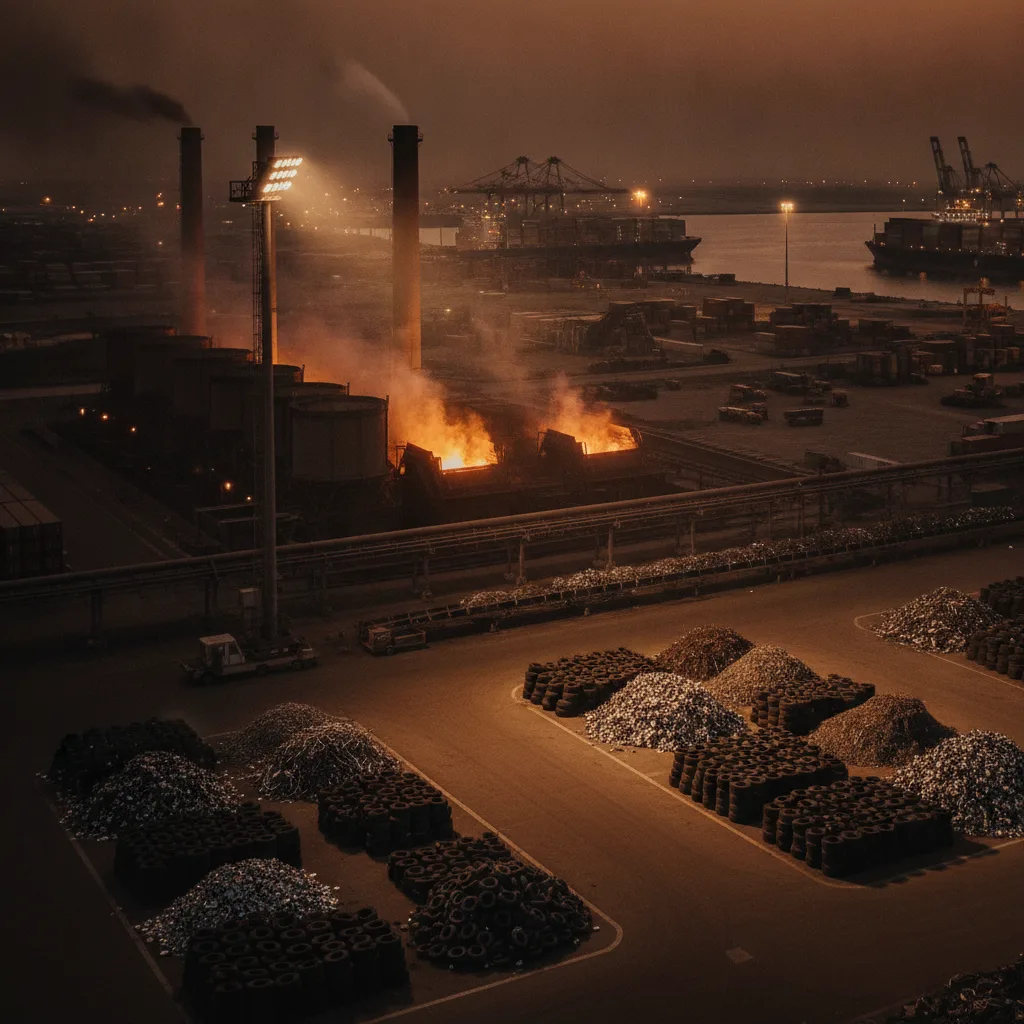
- Gulf states generate over 150 million tonnes of solid waste annually, making resource-efficiency targets in Vision 2030 a direct cost variable for every industrial operator in the region.
- Saudi Arabia's National Industrial Development & Logistics Program explicitly links manufacturing localisation targets to circular-material inputs, creating a procurement advantage for early movers.
- The circular model shifts the economic logic of production: continuous resource use replaces single-pass consumption, compressing raw-material costs across the supply chain.
- Green-procurement frameworks across the GCC are tightening; operators who voluntarily integrate secondary raw materials now will face lower compliance costs when mandates arrive.
A factory manager in Jubail today faces a choice that didn't exist five years ago: treat secondary raw materials as a procurement option, or wait until Saudi green-procurement mandates force the issue. Rؤية 2030 has steadily moved from aspirational document to binding industrial policy, and its resource-efficiency logic is now embedded in supplier qualification criteria, localisation quotas, and sustainability reporting frameworks that industrial operators can no longer defer.
What Vision 2030 Actually Demands from Industrial Operators
The Vision's economic model is not simply about diversifying away from hydrocarbons. Its human-centred framing ties GDP growth to productive employment, domestic value-addition, and reduced import dependence — three objectives that converge on one operational requirement: use resources more efficiently, and keep their value inside the Kingdom. 1
The National Industrial Development & Logistics Program (NIDLP) is the most direct expression of this logic. It links manufacturing localisation targets to input sourcing, which means a manufacturer relying on imported virgin materials faces a structural disadvantage relative to one who integrates domestic secondary inputs. The pressure is not rhetorical. Procurement qualification for major state-linked projects — from NEOM's industrial zones to Alat's advanced-manufacturing campus — is increasingly tied to sustainability criteria. (See our analysis of Alat's $100B bet and what it means for recycled materials.)
Vision 2030's Saudi Green Initiative compounds the pressure. Commitments to reduce carbon emissions and increase recycled waste volumes create a policy environment where the resource-efficiency of a production process becomes a reportable metric — and eventually a procurement gate.
The Circular-Economy Programs Already Embedded in the Vision's Industrial Pillar
The term "circular economy" does not always appear verbatim in Vision 2030 documents, but its mechanics are embedded throughout. The model — replacing the linear take-make-dispose pattern with continuous resource loops of reuse, repair, remanufacturing, and recycling — aligns precisely with the Vision's localisation and efficiency mandates. 1
Gulf states collectively generate over 150 million tonnes of solid waste annually. 1 That volume is not a disposal problem alone — it is a materials supply sitting largely uncaptured. The Vision's programs implicitly treat this as a strategic reserve: waste streams that, if processed, reduce import dependency for industrial inputs ranging from ferrous scrap to recovered polymers.
Saudi Arabia's Quality of Life Program and the broader GCC sustainability frameworks are pushing municipalities and industrial zones toward closed-loop waste management. The result is a growing secondary-materials market at the infrastructure level — one that industrial buyers can access before it becomes formalised through mandatory channels. Our piece on the GCC's $20.7bn infrastructure wave and the secondary materials play maps where the volumes are likely to emerge first.
How Secondary Raw Materials Fit the Resource-Efficiency Mandate
The resource-efficiency logic is commercially straightforward. In a resource-loop model, materials are kept in productive use for as long as possible, compressing the cost of raw inputs over time. 2 For a Gulf steel re-roller or plastics compounder, this translates directly: sourcing scrap or recovered feedstock domestically — rather than importing primary material — lowers landed cost while satisfying localisation calculations.
This is not a marginal gain. Commodity price volatility has made primary-material dependence a balance-sheet risk. Secondary-material pricing, while not immune to market swings, tracks a different supply dynamic and is increasingly buffered by regional policy incentives. Operators who have already built secondary-materials sourcing capabilities — supplier relationships, quality-assurance processes, logistics infrastructure — are insulated from the price spikes that punish buyers locked into virgin-commodity contracts.
The compliance dimension reinforces the economics. IFRS S1 and S2 sustainability reporting standards are moving toward mandatory adoption across GCC jurisdictions. (See our breakdown of what GCC industrials must do now on IFRS S1 & S2.) Operators with documented secondary-materials sourcing will have the data infrastructure for those disclosures already in place — a significant operational advantage over those building it under deadline pressure.
Three Practical Moves Gulf Manufacturers Can Make Before Regulation Forces Them
The window for voluntary positioning is compressing. Here are three concrete actions, ranked by implementation speed:
1. Audit your top five raw-material categories for secondary substitution. Identify which inputs — ferrous metals, aluminium, polymers, paper fibre, glass — have viable secondary equivalents available in the GCC market. Calculate the cost delta at current prices and at a 15% primary-material price increase. The number often surprises: secondary sourcing is already cost-competitive in several categories, not merely compliant. Our article on Saudi local manufacturing's growing recycling gap provides context on where the substitution gaps are largest.
2. Map your industrial waste streams against regional processors. Most Gulf manufacturers have imprecise data on the composition and volume of their own production waste. A formal waste-characterisation exercise identifies recoverable fractions that can be sold rather than disposed of — converting a cost line into a revenue line. The PPWR tightening piece shows how this logic is already being enforced on Gulf exporters shipping to European markets.
3. Align procurement and operations data with NIDLP and Saudi Green Initiative reporting frameworks now. The gap between voluntary disclosure and mandatory reporting is narrowing. Operators who build the data infrastructure today — material-origin tracking, waste-diversion rates, supplier sustainability credentials — will file their first mandatory disclosures without the crisis of an unprepared system. Those who wait will spend significantly more on consultancy and system integration under deadline pressure.
Tarsyn Group's View: Voluntary Alignment Beats Compliance-Driven Scrambling
The pattern is consistent across industrial policy cycles: operators who engage with a regulatory direction before it hardens extract commercial value from early positioning; those who wait treat compliance as a cost rather than a lever.
Vision 2030 is not a sustainability programme grafted onto an industrial policy. It is an industrial policy that embeds resource efficiency as a competitive discipline. The procurement advantages available to a manufacturer who integrates secondary raw materials today — lower input costs, stronger localisation credentials, readiness for sustainability disclosure — will not be available at the same terms once green-procurement mandates are explicit and every competitor is scrambling to qualify.
The GCC secondary-materials market is still early-stage enough that a thoughtful operator can shape supplier relationships, logistics arrangements, and quality-assurance protocols on their own terms. That window is closing as policy frameworks tighten and more sophisticated buyers enter the market.
Tarsyn Group's position: treat secondary-materials sourcing and waste-to-value processes as supply-chain functions with measurable cost and margin outcomes, not as sustainability gestures. Build the operational capability now, when the terms are favourable. The compliance deadline will arrive regardless — the question is whether you arrive at it with a functioning system or a remediation project.
If you want to assess where your operations stand against Vision 2030's industrial efficiency targets and map a practical secondary-materials sourcing strategy, speak with Tarsyn Group's advisory team. The conversation starts with your current raw-material mix and waste-stream data, not with a sustainability framework.
- الاقتصاد الدائري: حل مستدام لدول مجلس التعاون الخليجي - SustainGulf — sustaingulf.org
- فوائد الاقتصاد الدائري من أجل مستقبل أكثر اخضرارًا | RTS — www.rts.com