PPWR Tightens: What Gulf Traders Must Know Now
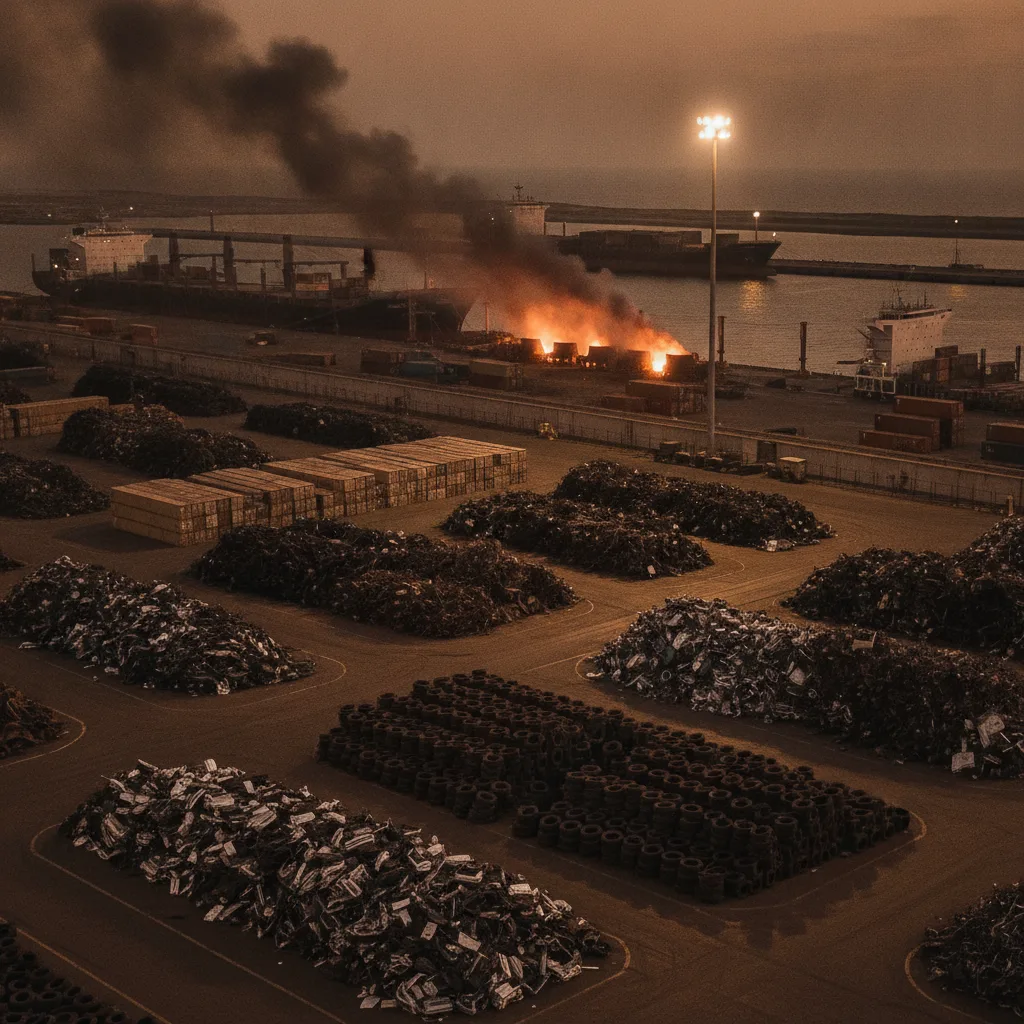
- PPWR (Regulation EU 2025/40) has applied directly across all 27 EU member states since 12 August 2026 — no grace period, no national transposition gap.
- Non-EU manufacturers are typically classified as the 'producer' under PPWR, carrying design compliance, Declaration of Conformity, and EPR registration obligations directly.
- GCC exporters face a dual compliance burden: EU-wide PPWR design rules plus separate national EPR registration fees in each member state where goods are placed on the market.
- The regulation's recycled-content mandates create an immediate sourcing decision for Gulf industrial operators: secure certified secondary raw materials now or lose EU market access.
A Gulf plastics extruder ships resin-coated packaging to three European retail chains. On 12 August 2026, those shipments became subject to a new compliance layer that the extruder's legal team had flagged as "a European issue." It is not. The EU's Packaging and Packaging Waste Regulation is a market-access instrument — and it lands on every non-EU manufacturer whose goods touch European shelves.
What PPWR Actually Requires — and When the Deadlines Hit
Regulation (EU) 2025/40, known as the PPWR, entered into force on 11 February 2025 and has been directly applicable across all 27 EU member states since 12 August 2026 5. The critical word is directly: unlike the 1994 Packaging and Packaging Waste Directive it replaces, PPWR is a regulation, not a directive. It required no national transposition and left no divergence between member states 4. There was also no grace period for existing stock — packaging produced before the deadline must comply 5.
The regulation establishes requirements across the full packaging lifecycle: environmental sustainability design, labelling, substance limits (including PFAS), recycled content minimums, and the documentation trail to prove all of it — a Declaration of Conformity 4. On top of these EU-wide design rules, every company placing packaged goods on a member state's market must register under that country's Extended Producer Responsibility (EPR) scheme and pay into its collection and recycling funding mechanism. EPR rules are now harmonised at the EU level, but registration and fee payment remain country-by-country — some states charge a one-time registration fee, while others, such as Spain, add a recurring annual fee on top 1.
The compliance architecture is therefore two-layered: one uniform EU rulebook for design and documentation, and up to 27 separate national financial obligations for producers 2.
Why Gulf Exporters Are Directly in the Regulatory Crosshairs
Under PPWR, the company classified as the "producer" — the entity that places packaged goods on the EU market — bears the obligations directly 5. For a non-EU manufacturer, that classification almost always applies to them, not to their EU importer or distributor. The practical consequence: a Saudi petrochemical producer selling polymer compounds in branded packaging to German industrial buyers is the producer under EU law. So is a UAE consumer goods manufacturer shipping to French supermarkets.
This is not a theoretical risk. PPWR applies to "all those who place products in packaging on the market" — the scope is deliberately broad 4. And because the regulation is directly binding with no transposition step, there is no domestic EU intermediary absorbing the obligation. Gulf operators that assumed their EU trading partners would handle packaging compliance were operating on a directive-era assumption that no longer holds.
The compliance burden for a GCC exporter selling into multiple EU countries stacks quickly: EU-wide design and documentation requirements, a Declaration of Conformity, registration in each national EPR scheme, and in most cases an EU-based Authorised Representative 5. Each of these workstreams carries lead time measured in months, not weeks.
The Secondary Raw Materials Gap PPWR Is About to Expose
The recycled content mandates in PPWR are where the regulation stops being a paperwork problem and becomes a procurement problem. The regulation sets minimum recycled content thresholds for packaging categories, and those thresholds tighten on a scheduled basis. For Gulf manufacturers, this means that packaging sourced from virgin material — which has been the default for most GCC industrial production — will fail compliance unless reformulated.
The secondary raw materials market in the GCC is thin relative to demand. Certified, specification-grade recycled content — the kind that carries a traceable chain of custody and qualifies under EU verification standards — is not abundantly available in the region. Operators who have not already begun qualifying recycled-content packaging suppliers are now competing for a constrained supply, and the specification bar is higher than the commodity scrap market typically delivers.
This gap is not unique to packaging. The broader challenge of building circular material flows in Gulf industry has been developing across sectors — from the scrap metal trade disruptions documented in the US-Canada tariff war's knock-on effects for GCC traders to the infrastructure-driven secondary materials demand analysed in the GCC's infrastructure wave piece. PPWR accelerates the timeline on all of it.
The Visual AI tools now entering Gulf recycling and manufacturing operations are part of the answer — automated material sorting and quality verification at scale can raise the grade and traceability of secondary streams. But technology deployment takes time, and the regulatory clock has already started.
How Scrap Trading and Recycled-Content Sourcing Must Adapt
For scrap traders operating in and out of the Gulf, PPWR creates both a constraint and a margin opportunity. The constraint: grades of secondary material that cannot demonstrate recycled-content certification under EU standards will not command a premium from manufacturers trying to meet PPWR thresholds. The opportunity: material that can carry that certification — with documented chain of custody, consistent specification, and audit-ready provenance — will trade at a premium to uncertified equivalents.
The practical adaptation for scrap traders is threefold:
1. Grade and certify upstream. Material sourced from GCC industrial operations needs to be sorted, tested, and documented to a specification that EU packaging converters can reference in their Declaration of Conformity. This requires investment in sorting infrastructure and third-party verification. 2. Build direct relationships with packaging converters, not just commodity buyers. Converters under PPWR pressure need reliable, certified secondary raw material supply — not spot tonnes. Long-term offtake agreements at specification are more defensible than open-market scrap sales. 3. Track EPR scheme requirements by material type. Different member states weigh different materials differently in their EPR fee structures. Material choice (PE, PP, PET, paper, glass) affects both the design compliance path and the EPR cost calculation — a factor that GCC exporters can influence at the product development stage rather than after the fact.
The parallel signal from the EU's Carbon Border Adjustment Mechanism and the pressure building from record ocean heat on Gulf industrial operators all point in the same direction: the cost of non-compliance with sustainability-linked trade rules is rising faster than the cost of early adaptation.
Tarsyn's View: The GCC Window to Get Ahead of This Is Narrow
PPWR is the clearest signal yet that circular economy sourcing in the Gulf is an operational urgency, not a sustainability aspiration. The regulation took effect in August 2026. Manufacturers whose products are already on EU shelves are already in scope. Those still assessing their exposure are losing qualification time.
The Gulf's position is not hopeless — it is late. The region has industrial feedstock, trading infrastructure, and the capital to build certified secondary material supply chains faster than most emerging markets. But the window for orderly adaptation is narrowing. Operators who begin qualifying recycled-content suppliers, restructuring packaging specifications, and registering under EPR schemes in their priority EU markets now will be able to hold their European accounts. Those who wait for a clarity event — a customs hold, a buyer audit, a lost tender — will face both the compliance cost and the relationship cost simultaneously.
Tarsyn Group's view is that this is where sustainable cost reduction for Saudi and Gulf industrial operators becomes concrete rather than conceptual: a compliance-driven sourcing shift that cuts virgin material spend, qualifies EU market access, and builds a secondary materials supply position before the market prices it fully.
The conversations that matter right now are not about sustainability strategy. They are about procurement contracts, material specifications, EPR registration timelines, and which EU markets to prioritise given fee structures and volume thresholds. If you are a GCC industrial operator or scrap trader with European exposure, the time to structure that analysis is now — talk to Tarsyn Group about sustainability operations and PPWR compliance positioning.
The regulation does not wait for readiness assessments. It is already in force.
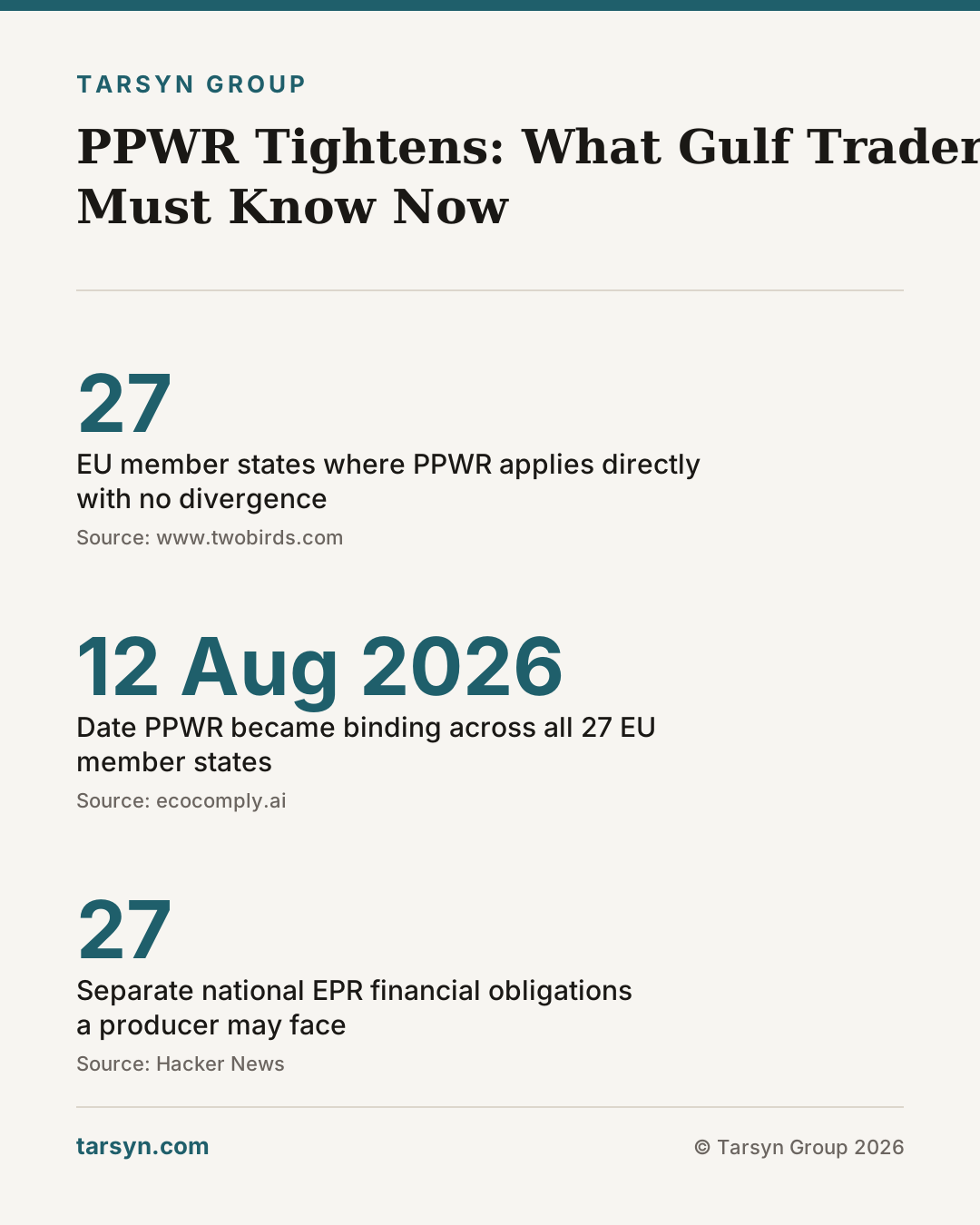
!PPWR Tightens: What Gulf Traders Must Know Now — the numbers at a glance
- PPWR lands another blow to an precarious tabletop industry — hn:frontpage
- PPWR lands another blow to an precarious tabletop industry (discussion) — Hacker News
- PPWR Packaging and Packaging Waste Regulation new obligations for all those who place products in p - Bird & Bird — www.twobirds.com
- PPWR Explained: What Changed on 12 August 2026 — ecocomply.ai